
This guide answers: what body fat percentage means and how to measure it.
Looking for how to actually lose fat and build muscle at the same time? Read Body Recomposition: How to Lose Fat and Build Muscle at the Same Time.
Body Fat Percentage: What It Means and How to Measure It
Body fat percentage is a more accurate indicator of health than weight alone. Learn what the numbers mean, healthy ranges, and how to measure yours accurately.
Introduction
Step on a scale and you'll get a number — but that number tells you almost nothing about your health. Two people at 80 kg can look completely different: one lean and muscular, the other carrying excess fat around the midsection. The difference? Body fat percentage.
In this comprehensive guide, you'll learn what body fat percentage really means, how to measure it accurately at home or professionally, what ranges are healthy for your age and sex, and proven strategies to improve your body composition. Whether you're an athlete fine-tuning performance or someone starting their fitness journey, this metric gives you clarity the scale simply can't provide.
Quick answer
How do you calculate your body fat percentage?
By definition, body fat percentage = (fat mass ÷ total body mass) × 100. Someone weighing 80 kg who carries 16 kg of fat is at 20% body fat.
The hard part is the fat mass. A bathroom scale gives total mass and a tape measure gives circumferences — neither measures fat directly. Every practical method therefore estimates fat mass indirectly: tape-measure equations, skinfold calipers, bioelectrical impedance (BIA) or a DXA scan.
The simplest home option is the U.S. Navy tape-measure equation, which is what our body fat calculator uses. Treat any result as an estimate and compare readings from the same method over time.
What Body Fat Percentage Actually Tells You
Body fat percentage represents the proportion of your total body weight that consists of fat tissue. Your body contains two fundamental types of fat:
Essential fat is exactly what it sounds like — fat your body absolutely needs for basic physiological functions, such as fat in cell membranes, nerve tissue, bone marrow and organs. The American Council on Exercise (ACE) puts essential fat at roughly 2–5% for men and 10–13% for women; the higher female level reflects sex-specific fat linked to reproductive function.
Storage fat is the energy reserve your body accumulates beneath your skin (subcutaneous fat) and around your organs (visceral fat). Some storage fat is normal and useful. Large amounts — particularly abdominal and visceral fat — are associated in population studies with higher rates of heart disease, type 2 diabetes and metabolic syndrome. That is an association across groups, not a prediction for any one person.
Unlike BMI, which only relates weight to height, body fat percentage tries to describe your actual composition. A muscular athlete at 12% body fat and a sedentary person at 30% body fat might share the same BMI — but their health profiles are worlds apart. This is why measuring lean body mass alongside body fat gives you the full picture.
Healthy Body Fat Ranges
Ranges differ between men and women. The table below reproduces the American Council on Exercise (ACE) body fat chart, the same thresholds our calculator uses. These are reference classifications — not medical diagnoses and not universally optimal targets. They do not adjust for age, ethnicity or measurement method:
ACE Body Fat Reference Classifications
| Category | Men | Women | What it means |
|---|---|---|---|
| Essential fat | 2 – 5% | 10 – 13% | Minimum needed for normal body function |
| Athletes | 6 – 13% | 14 – 20% | Typical of many trained athletes |
| Fitness | 14 – 17% | 21 – 24% | Typical of regularly active adults |
| Average* | 18 – 24% | 25 – 31% | Typical of the average non-athlete |
| Obese | 25%+ | 32%+ | ACE's highest category |
*ACE names this band "Average"; our calculator displays the same 18–24% / 25–31% band as "Acceptable". The thresholds are identical.
Key Takeaway
Important: Very low body fat is not automatically healthier. Approaching essential-fat levels — usually through prolonged low energy intake — has been linked to menstrual disruption in women and lower reproductive hormones in men. For most people there is little reason to chase extremely low numbers.
How to Measure Your Body Fat
Every method below estimates fat mass indirectly, using a model built on a reference population. None is perfectly accurate, and different methods can give noticeably different numbers for the same person on the same day.
A. Tape-measure estimates (U.S. Navy method)
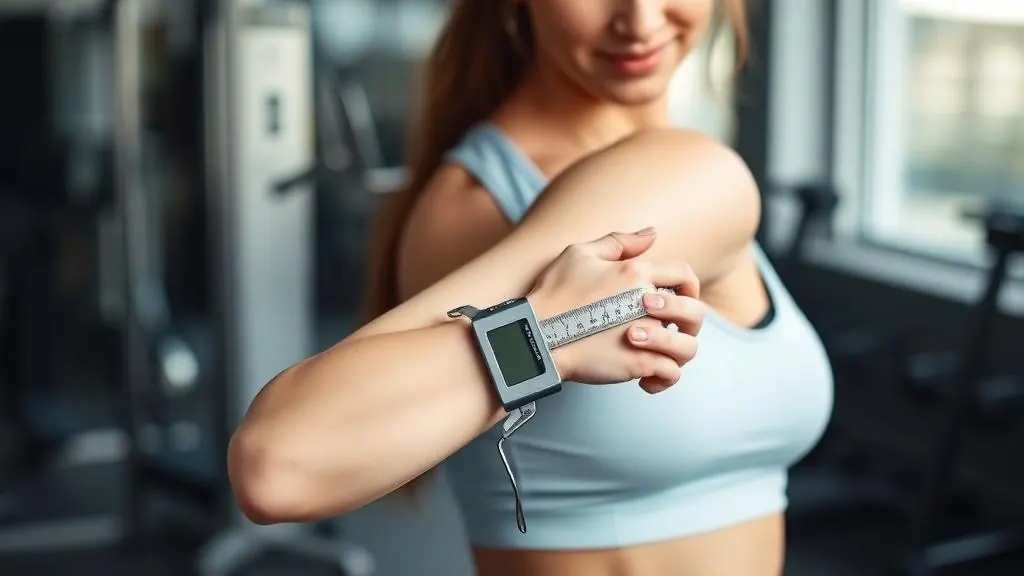
What you measure: height and neck and waist circumference; women also measure the hips. Measure the neck just below the larynx, the waist at the navel for men or the narrowest point for women, and the hips at the widest point of the buttocks.
The formula (metric, men): body fat % = 495 ÷ (1.0324 − 0.19077 × log10(waist − neck) + 0.15456 × log10(height)) − 450. The women's version adds hip circumference and uses different constants. Waist, neck, hip and height are all in centimetres. This metric form is derived from the Hodgdon & Beckett (1984) equations used by the U.S. Navy; other circumference formulas exist and are not interchangeable.
Worked example: a man who is 180 cm tall, with a 90 cm waist and a 38 cm neck, gets 495 ÷ (1.0324 − 0.19077 × log10(52) + 0.15456 × log10(180)) − 450 ≈ 19.8%. At 80 kg that suggests roughly 15.8 kg of fat and 64.2 kg of lean mass — the same numbers our Navy-method body fat calculator returns for these inputs (it rounds to one decimal place).
Why some calculators show 19.9%: the widely used inch-based version, 86.010 × log10(waist − neck) − 70.041 × log10(height) + 36.76, gives about 19.9% for the same person (35.43 in waist, 14.96 in neck, 70.87 in height). The metric and inch versions are separately fitted forms of the same model, so they differ slightly — here by about 0.1 percentage points. That gap is far smaller than the method's normal measurement error.
Limitations: the equations were developed on military personnel and can be less reliable for very muscular, very lean or high-body-fat individuals. A small change in where you place the tape can shift the result, so measure at the same landmarks, in the morning, relaxed, with the tape snug but not compressing the skin.
B. Skinfold calipers
Calipers measure the thickness of a pinched fold of skin and the fat beneath it (subcutaneous fat) at several standard sites. The sum is entered into a prediction equation, such as Jackson–Pollock, to estimate total body fat. Skinfolds cannot see visceral fat, so the equation assumes a typical relationship between the two.
Technique drives the result: exact site location, how firmly the fold is grasped and how long the caliper is held all matter. Results are most comparable when the same trained person uses the same caliper and protocol each time. Different equations applied to the same measurements can also produce different estimates.
C. Bioelectrical impedance (BIA)
BIA scales and handheld devices pass a weak electrical current through the body. Lean tissue holds more water and conducts better than fat, so the device estimates body water and then fat-free mass using a built-in equation, often combined with your entered height, age and sex.
Because the reading depends on body water, it shifts with hydration, recent meals, alcohol, exercise, skin temperature and the menstrual cycle. A single reading is easy to overinterpret. Measure at the same time of day under similar conditions — for example, on waking after using the toilet — and look at the trend across several weeks.
D. DXA (dual-energy X-ray absorptiometry)
A DXA scan uses two low-dose X-ray energies to separate bone, lean tissue and fat, and can show how fat is distributed between regions such as the trunk and limbs. It is widely used as a reference method in research and can be useful when you want a detailed baseline or regional information.
DXA is still an estimate: results can vary between machines, manufacturers and software versions, and are affected by hydration and recent food intake. It costs money, involves a small radiation dose and is not available everywhere. For repeat scans, use the same facility and similar conditions.
Choosing a Body Fat Measurement Method
| Method | Equipment | Ease of use | Key advantages | Main limitations |
|---|---|---|---|---|
| Tape measure (Navy) | Tape measure | Easy, at home | Free, repeatable, quick | Population-based equation; sensitive to tape placement |
| Skinfold calipers | Calipers + trained tester | Moderate, needs practice | Cheap; good for tracking with one tester | Technique-dependent; misses visceral fat |
| BIA scale/device | Smart scale or handheld | Very easy | Convenient for frequent readings | Strongly affected by hydration and timing |
| DXA scan | Clinic or lab scanner | Requires appointment | Detailed, shows regional fat | Cost, access, small X-ray dose; varies by machine |
Get a quick tape-measure estimate using our free Body Fat Calculator based on the Navy method body measurements. To see where fat is distributed, check the Waist-Hip Ratio Calculator and read what waist-to-hip ratio says about health.
How to Interpret Your Result
- Methods disagree. A tape-measure estimate, a BIA scale and a DXA scan can differ by several percentage points for the same person. Compare results only within the same method.
- Trends beat single readings. Day-to-day noise is common. A consistent direction over several weeks, measured the same way, is more informative than one number.
- There is no single ideal percentage. Reference bands are broad, and what suits one person depends on age, sex, genetics, sport and health history.
- Body fat alone does not define health. Blood pressure, blood lipids, blood glucose, fitness, waist size and family history all matter. Use body fat alongside BMI and waist measurements, and discuss health concerns with a qualified professional.
Practical Applications
Knowing your body fat percentage enables smarter decisions across fitness and health:
- Set realistic weight goals: Instead of targeting a number on the scale, aim for a specific body fat range. This prevents the common trap of losing weight but still looking "soft."
- Monitor diet effectiveness: If your body fat drops while weight stays stable, you're successfully recomposing — gaining muscle and losing fat simultaneously.
- Calculate better nutrition targets: Base your TDEE and macros on lean mass for more accurate results.
- Add context to BMI: Body fat and waist measurements can show whether a high or normal BMI reflects fat or muscle, adding information BMI alone cannot give.
Strategies for Improving Body Composition
Nutrition
Create a moderate calorie deficit of 300–500 calories below your TDEE. This is a common, moderate starting point that is generally easier to sustain than aggressive cuts. Prioritize protein at 1.6–2.2 g/kg of body weight, a range often recommended for active people, to help preserve muscle. Focus on whole foods: vegetables, lean proteins, whole grains, and healthy fats.
Exercise
Resistance training should be the centerpiece of your routine. Building and maintaining muscle raises lean mass, which lowers body fat percentage even at the same body weight. Complement with a mix of steady-state cardio and high-intensity intervals for heart health and calorie burning — but don't replace strength training.
Lifestyle
Sleep 7–9 hours nightly. Short sleep has been linked in studies to changes in appetite hormones and increased hunger, which can make a calorie deficit harder to maintain. Manage stress, since chronic stress can affect appetite, sleep and food choices. Stay properly hydrated — even mild dehydration impairs exercise performance and metabolism.
Common Mistakes and Misconceptions
- Relying only on scale weight: Weight fluctuates daily due to water, food, and glycogen. Body fat estimates, tracked consistently, add information about what is changing.
- Believing in spot reduction: You can't lose fat from specific areas by exercising those areas. Fat loss happens across the body in a pattern largely set by genetics and sex.
- Crash dieting: Very large calorie deficits increase the share of weight lost as muscle, which works against improving body composition.
- Only doing cardio: Without resistance training, more of the weight lost tends to come from lean mass. Strength training helps preserve or build muscle.
- Comparing yourself to others: Genetics influence where you store fat and how quickly you lose it. Focus on your own progress month over month.
FAQs and Quick Tips
What is the most accurate way to measure body fat?
No method is perfectly accurate. DXA is widely used as a research reference and adds regional detail, but still varies between machines. For home use, a tape-measure or BIA estimate taken consistently under the same conditions is practical for tracking trends.
Can you lose body fat without losing weight?
Yes — through body recomposition where you lose fat while gaining muscle. The scale may stay similar, but your body fat percentage decreases.
How quickly can body fat percentage change?
It varies widely with starting point, calorie deficit, training and measurement error. Because home methods are noisy, judge change over several weeks rather than week to week.
Is body fat percentage better than BMI?
They measure different things. BMI estimates overall body mass relative to height. Body fat percentage tells you actual composition. Using both together provides the most complete picture.
What's the fastest way to reduce body fat?
Combine a moderate calorie deficit with resistance training and adequate protein. There are no shortcuts, and a sustainable approach is usually easier to keep up.
Conclusion and Next Steps
Body fat percentage offers insight that the bathroom scale simply can't provide. It tells you not just how much you weigh, but what you're made of. The path to better body composition isn't about extreme diets or punishing routines — it's about consistent, sustainable habits.
Here's your action plan:
- Measure your body fat using our free Body Fat Calculator
- Track your lean mass with the LBM Calculator
- Set your calorie target via the TDEE Calculator
- Optimize your protein with the Protein Calculator
- Start resistance training and re-measure with the same method every few weeks
References
- Hodgdon JA, Beckett MB. Prediction of percent body fat for U.S. Navy men and women from body circumferences and height. Naval Health Research Center, Report No. 84-11 and 84-29, 1984. Source of the circumference equations.
- American Council on Exercise. Body fat percentage: charting averages in men and women. Confirms the 18–24% (men) and 25–31% (women) "average" band and the low thresholds.
- Jackson AS, Pollock ML. Generalized equations for predicting body density of men. British Journal of Nutrition. 1978;40(3):497–504. Skinfold prediction equations.
- Prado CM, Gonzalez MC, Norman K, et al. Methodological standards for body composition — levels, models, and terminology. American Journal of Clinical Nutrition. 2025. Why every method is model-based.
- Prado CM, Gonzalez MC, Norman K, et al. Methodological standards for body composition assessment: bioimpedance, DXA, CT and ultrasound methods. American Journal of Clinical Nutrition. 2026. Expert guidance on BIA and DXA use, standardised conditions and limitations.
💪 Ready for body recomposition?
Our body recomposition guide covers how to lose fat and build muscle simultaneously — with tracking strategies, training programs, and real-world case studies.
📖 Body fat is just one piece of the puzzle
Discover how it connects to lean mass, TDEE, and nutrition in our Ultimate Guide to Body Health Metrics.
Frequently Asked Questions
Related Calculators
Related Articles
Understanding Your BMI and What It Really Means
Your Body Mass Index (BMI) is one of the most commonly used health metrics, but what does it actually tell you? Learn how to interpret your BMI results and understand its limitations.
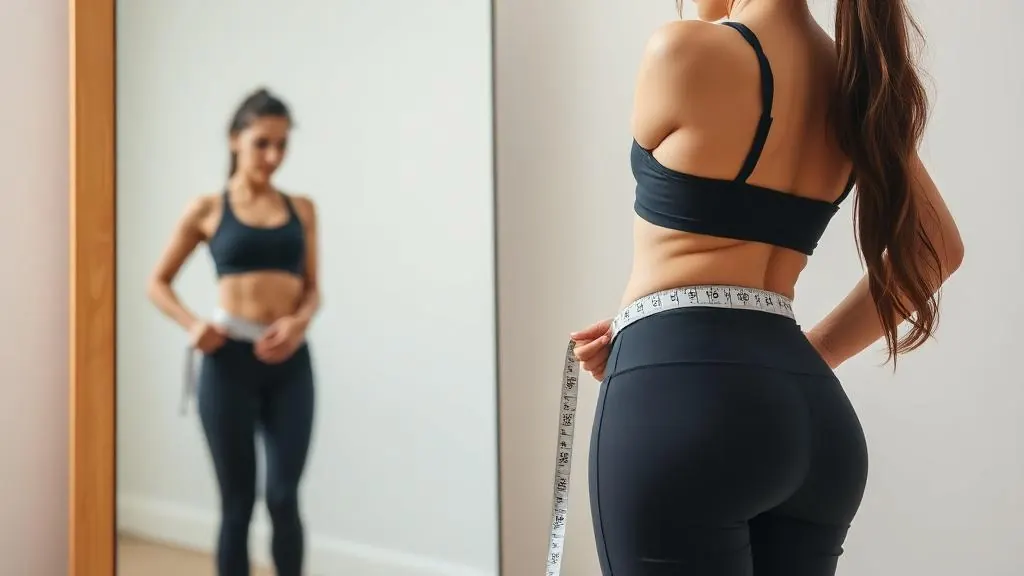
Waist-Hip Ratio: A Key Indicator of Health Risk
Your waist-hip ratio is a powerful predictor of health risks. Learn how this simple measurement can reveal important information about your body fat distribution.
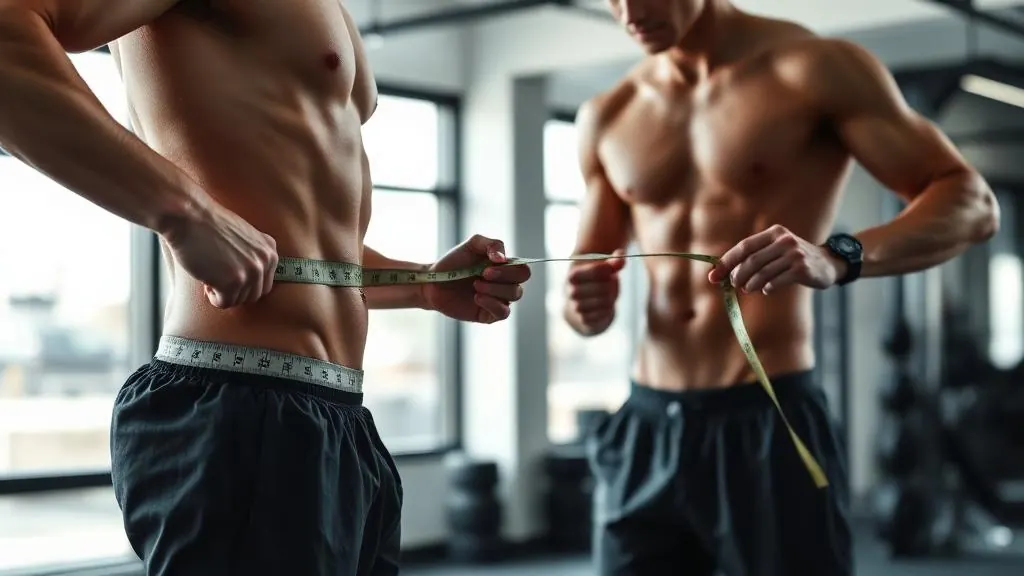
Lean Body Mass: The Complete Guide to Measuring, Calculating, and Optimizing LBM
Lean Body Mass reveals what your body is truly made of. Learn the difference between LBM and muscle mass, calculate yours with proven formulas, and discover strategies to optimize your body composition.