
This guide answers: calories burned by 30+ specific activities, compared.
Looking for the mechanism behind calorie burn: METs, EPOC and intensity? Read How Calorie Burn Works: METs, Factors, and the Afterburn Effect.
Calories Burned by Exercise: 30+ Activities Compared
How many calories do you burn exercising? Compare 30+ activities per 30 minutes, see what changes your personal burn, and calculate the number for your own weight.
Quick answer
A 70 kg adult burns roughly 175–385 calories in 30 minutes of typical exercise. Brisk walking (6.5 km/h) costs about 175 kcal, vigorous weight training 210 kcal, moderate cycling 238 kcal, running at 8 km/h 291 kcal, HIIT 315 kcal and jumping rope 385 kcal. These are MET-based estimates of gross burn; your own number scales with body weight — about 14% more per extra 10 kg at 70 kg — and with how hard you work.
Exercises Ranked by Calories Burned (30 Minutes)
Every number below is generated with the same MET engine as our calorie burn calculator (calories = MET × body weight in kg × hours), so the table and the tool always agree. Worked example: running at 8 km/h is 8.3 MET, so a 70 kg person burns 8.3 × 70 × 0.5 ≈ 291 kcal in 30 minutes. Values are gross energy expenditure (they include resting metabolism) and assume steady effort for the whole 30 minutes. Activities are ranked from highest to lowest burn, with columns for three body weights because weight changes the answer more than almost anything else.
Calories burned in 30 minutes, ranked by burn rate
| Activity | MET | 60 kg | 70 kg | 90 kg | kcal / min (70 kg) |
|---|---|---|---|---|---|
| Running (12 km/h) | 11.5 | 345 kcal | 403 kcal | 518 kcal | 13.4 |
| Jump rope | 11.0 | 330 kcal | 385 kcal | 495 kcal | 12.8 |
| Cycling (fast, 25+ km/h) | 10.0 | 300 kcal | 350 kcal | 450 kcal | 11.7 |
| Soccer (game) | 10.0 | 300 kcal | 350 kcal | 450 kcal | 11.7 |
| Running (10 km/h) | 9.8 | 294 kcal | 343 kcal | 441 kcal | 11.4 |
| Swimming (laps, vigorous) | 9.8 | 294 kcal | 343 kcal | 441 kcal | 11.4 |
| HIIT training | 9.0 | 270 kcal | 315 kcal | 405 kcal | 10.5 |
| Running (8 km/h) | 8.3 | 249 kcal | 291 kcal | 374 kcal | 9.7 |
| Basketball (game) | 8.0 | 240 kcal | 280 kcal | 360 kcal | 9.3 |
| CrossFit | 8.0 | 240 kcal | 280 kcal | 360 kcal | 9.3 |
| Tennis (singles) | 7.3 | 219 kcal | 256 kcal | 329 kcal | 8.5 |
| Cycling (moderate, 20 km/h) | 6.8 | 204 kcal | 238 kcal | 306 kcal | 7.9 |
| Swimming (leisure) | 6.0 | 180 kcal | 210 kcal | 270 kcal | 7.0 |
| Weight training (vigorous) | 6.0 | 180 kcal | 210 kcal | 270 kcal | 7.0 |
| Hiking | 5.3 | 159 kcal | 186 kcal | 239 kcal | 6.2 |
| Walking (brisk, 6.5 km/h) | 5.0 | 150 kcal | 175 kcal | 225 kcal | 5.8 |
| Dancing (general) | 5.0 | 150 kcal | 175 kcal | 225 kcal | 5.8 |
| Tennis (doubles) | 5.0 | 150 kcal | 175 kcal | 225 kcal | 5.8 |
| Weight training (moderate) | 5.0 | 150 kcal | 175 kcal | 225 kcal | 5.8 |
| Golf (walking with clubs) | 4.3 | 129 kcal | 151 kcal | 194 kcal | 5.0 |
| Cycling (leisure, 15 km/h) | 4.0 | 120 kcal | 140 kcal | 180 kcal | 4.7 |
| Walking (moderate, 5 km/h) | 3.5 | 105 kcal | 123 kcal | 158 kcal | 4.1 |
| Weight training (light) | 3.5 | 105 kcal | 123 kcal | 158 kcal | 4.1 |
| Yoga (hatha) | 2.5 | 75 kcal | 88 kcal | 113 kcal | 2.9 |
| Stretching | 2.3 | 69 kcal | 81 kcal | 103 kcal | 2.7 |
| Walking (slow, 3 km/h) | 2.0 | 60 kcal | 70 kcal | 90 kcal | 2.3 |
Two patterns are worth reading out of that table. A 90 kg person burns roughly 50% more than a 60 kg person for the identical session, which is why generic "calories burned" charts mislead most readers. And the gap between the top and the bottom of the list is about fourfold per minute — but the activities at the top are the ones you can sustain for the fewest minutes, so total weekly calories often favour the middle of the table.
Introduction
You have thirty minutes and one question: which workout will torch the most calories? It feels like a simple thing to Google, but the answer is genuinely more interesting than most fitness articles let on. Running does not always win. HIIT is not always the best use of your time. And the treadmill display telling you that you just burned 437 calories is, almost certainly, lying to you.
The honest version of this topic requires two shifts in thinking. First, calorie burn is not a property of an exercise — it is a property of you doing that exercise, at your weight, at your intensity, with your history of training. Second, the calories you burn in a session are only part of the picture. The muscle you build, the fidgeting you do afterwards, and the intensity you can sustain across an entire week matter more than any single workout ever will.
This guide walks through what determines calorie burn, what a realistic 30-minute session costs across thirty-odd activities, and how to build an exercise routine that actually shifts body composition. For the underlying physiology — METs, EPOC, and the research behind the numbers — pair this with our companion piece on the science of exercise energy expenditure.
Key Takeaway
How Calorie Burn Actually Works
Exercise physiologists use a unit called the MET — a Metabolic Equivalent of Task — to compare the energy cost of activities. One MET is the rate at which your body burns energy while sitting quietly: roughly one calorie per kilogram of body weight per hour. An activity rated at 8 METs therefore costs eight times as much energy per minute as sitting still. The framework is deliberately simple because the underlying reality is not: heart rate, oxygen consumption, muscle recruitment and movement efficiency all vary between individuals, and METs give researchers a way to average across those differences.
The working formula is straightforward:
Calories burned = METs × body weight (kg) × duration (hours)
A 70 kg runner moving at 8 km/h operates around 8.0 METs, so a 30-minute run costs roughly 8.0 × 70 × 0.5 = 280 calories. The same person walking briskly at 5 km/h — a 3.5 MET activity — burns 123 calories in the same half hour. That difference, extended across a year of daily sessions, is meaningful. But notice something important: neither number is life-changing on its own. A single Snickers bar is 250 calories. Exercise burn is a real lever, but it is a smaller one than most people believe.
Where the picture gets more interesting is intensity. Vigorous efforts do not just burn more per minute — they also raise your metabolic rate for a while afterwards, an effect researchers call excess post-exercise oxygen consumption, or EPOC. Its size grows with both intensity and duration, but in most studies it is a modest addition compared with the energy used during the session itself. Easy, steady exercise produces little. For illustrative ranges by intensity, see the afterburn section of our calorie burn calculator.
What 30 Minutes of Exercise Really Costs
The numbers below are estimates for a 70 kg adult exercising for thirty minutes. Scale them up or down for your own weight — burn scales in direct proportion to body weight — and treat them as a directional guide rather than a calibrated measurement. MET values are averages, and individuals can differ noticeably from them.
Among cardio activities, jumping rope and faster running are at the top. Rope work comes to about 385 kcal for the half hour and running at 10 km/h about 343 kcal. Moderate cycling and leisure swimming sit lower, around 238 and 210 kcal. Brisk walking, often dismissed as "not real exercise", still burns about 175 kcal in thirty minutes and is one of the most sustainable forms of movement for most adults.
- 385kcalJump rope
- 343kcalRunning (10 km/h)
- 291kcalRunning (8 km/h)
- 238kcalCycling (moderate, 20 km/h)
- 210kcalSwimming (leisure)
- 175kcalWalking (brisk, 6.5 km/h)
Strength training and HIIT are where the raw calorie-per-minute numbers understate the true impact. A vigorous weight session burns around 210 kcal in half an hour — less than running — but it builds or preserves muscle, which supports body composition over time. HIIT comes to about 315 kcal in the session, plus some afterburn. Combining strength training with cardio is a common, well-supported approach for body composition; the best mix depends on your goals and what you will keep doing.
- 315kcalHIIT training+ some afterburn
- 280kcalCrossFit
- 210kcalWeight training (vigorous)
- 175kcalWeight training (moderate)
- 123kcalWeight training (light)
Recreational sports occupy a satisfying middle ground. A half-hour of real basketball play comes to about 280 kcal and soccer about 350 kcal, though actual effort in games varies a lot. Yoga burns less (about 88 kcal) but can improve mobility and is easy to combine with other training.
- 350kcalSoccer (game)
- 280kcalBasketball (game)
- 256kcalTennis (singles)
- 186kcalHiking
- 151kcalGolf (walking with clubs)
- 88kcalYoga (hatha)

Why Two People Burn Different Amounts
Put two people on identical treadmills at the same speed for the same time and they will burn measurably different numbers of calories. The most obvious reason is body weight: a 90 kg runner is moving about 29% more mass than a 70 kg runner, and MET-based estimates assign about 29% more energy for the same session. This is why heavier people often lose weight quickly at the start of a training programme and then slow down — the arithmetic genuinely shifts as they get lighter.
Body composition matters almost as much as body weight. Muscle tissue is metabolically active in a way that fat is not: each kilogram of muscle burns roughly 13 additional calories per day at rest, and considerably more during exercise. That is why people with higher lean body mass can eat more without gaining weight, and why the single most durable intervention for raising your daily burn is not doing more cardio — it is building and keeping muscle.
The most under-appreciated factor is fitness itself. Trained athletes are, cruelly, more efficient at moving than untrained beginners. A veteran runner covers 5 km at a lower heart rate, lower oxygen cost and lower calorie burn than they did a year earlier at the same pace. This is progress by every physiological measure, but it means the workout that used to feel like a hard session now barely dents the day's energy balance. The answer is not to abandon what works — it is to progress the stimulus: longer, faster, heavier, or more complex, so the body has something new to adapt to.
Age slows metabolic rate too, though far less than the fitness industry likes to claim. The Pontzer laboratory's landmark 2021 analysis of energy expenditure across the human lifespan found that adjusted metabolic rate is essentially flat from age 20 to age 60. What actually changes is muscle mass and activity — both of which are, at least in part, under your control. The much-cited "slower metabolism" of middle age is mostly a story about lost muscle and lost movement.
Sex differences follow a similar pattern. Men burn more absolute calories than women of the same weight, mostly because they carry more lean tissue. When you adjust for lean body mass, the gap largely disappears. This matters because it means the correct target for a woman is not "eat like a smaller man" — it is to build the lean tissue that raises the metabolic floor.

How to Get More From Every Workout
There is a temptation, once you understand the numbers, to try to game them: pick the highest-MET activity, do it every day, eat back nothing. That approach almost always collapses. The people who actually change their body composition play a longer game, and it comes down to five habits that compound.
The first is using intensity as a lever, not as a personality. Short, hard intervals are time-efficient because their per-minute burn is high, but longer moderate sessions can burn as much or more in total. Choose the intensity you can recover from and repeat week after week.
The second is strength training as metabolic infrastructure. Every kilogram of muscle you add is roughly 13 kcal a day at rest, every day, for as long as you keep training. Gain three kilograms of muscle over a year and you have created a 14,000-calorie annual burn that runs while you sleep — the rough energy equivalent of two kilograms of body fat. No cardio session can match that leverage.
The third is protecting NEAT — non-exercise activity thermogenesis, the calories you burn walking, fidgeting, standing and generally not sitting still. NEAT can swing by 300 to 500 calories a day between an active and a sedentary lifestyle at the same body weight. This is often larger than the workout itself, and it is silently sabotaged when people "reward" a hard training session by lying on the sofa for the rest of the day. Factor real daily activity into your TDEE calculation instead of guessing.
The fourth is fuelling the work you are doing. Adequate protein intake protects the muscle your training is trying to build and carries the highest thermic effect of the three macronutrients — 20 to 30% of protein calories are burned just digesting it, compared to 5 to 10% for carbohydrates and 0 to 3% for fat. Under-eating protein while dieting is one of the fastest ways to lose the exact tissue that keeps your metabolism up.
The fifth is progressive overload for cardio. Bodies adapt. Sessions that used to be difficult become easy, and easy sessions burn less. Every four to six weeks, ask what you are progressing: longer intervals, faster paces, heavier hills, harder classes. Without a new demand, calorie burn drifts downward on the same workout, and so does the training response.
The Mistakes That Quietly Erase Your Deficit
Most people who plateau on a training programme are not doing anything obviously wrong. They are making one of a small set of quiet mistakes that add up over weeks.
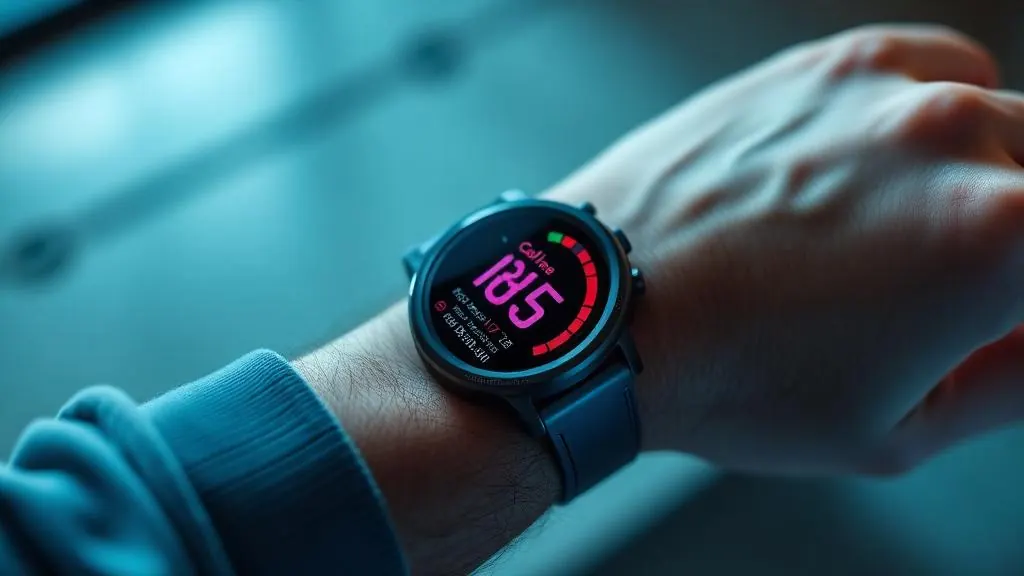
The most common is trusting the calorie readout on cardio equipment. Machine and tracker readouts are model-based estimates, and validation studies of wrist-worn devices have found energy-expenditure errors that are often large and inconsistent between devices and activities. Treat any displayed burn number as a rough guide, and judge your plan by weight and measurement trends over several weeks.
The second is the "I earned this" fallacy. A 30-minute run buys back about 280 calories. A large blueberry muffin from a good bakery is 500. A pint of beer is 210. A modest post-workout treat can consume the entire session's burn twice over, and yet the psychological logic — I trained hard, I deserve this — is nearly universal. The uncomfortable truth is that exercise is a poor tool for creating a calorie deficit. It is an excellent tool for health, mood, insulin sensitivity and muscle retention while dieting; it is a mediocre tool for weight loss on its own.
The third is treating cardio and strength as substitutes. They are not. Cardio burns more calories per session; strength training raises your resting burn indefinitely and preserves the muscle that gives your body its shape. A programme that does only one of the two is leaving most of the benefit on the table.
The fourth is ignoring the rest of the day. A 300-calorie gym session followed by ten hours of sitting is a smaller total burn than a person with no gym session who walks 12,000 steps and takes the stairs. If you had to choose only one — and you do not — general daily activity would beat structured exercise for most weight-loss goals.
The fifth is eating back all your exercise calories. The estimates are too high, the psychological effect is too easy to abuse, and the deficit disappears. If you insist on eating back exercise calories, eat back no more than half — and stop doing it entirely on days when your calorie deficit has stalled.
Questions Readers Ask Most
Which single exercise burns the most calories?
By raw MET value, jumping rope, running above 10 km/h and vigorous HIIT are hard to beat. But this is the wrong question. The best exercise is the one you will still be doing next April. A brisk daily walk done for a decade will change your body more than a HIIT programme abandoned after six weeks.
Does muscle really burn more calories than fat?
Yes, but the per-pound difference is smaller than fitness folklore claims — around 6 kcal per day for muscle versus 2 kcal for fat at rest. The real value of muscle is not its resting metabolic contribution; it is what it does to your capacity to train, your posture, your insulin sensitivity and your appearance at any given body weight.
How accurate are fitness trackers?
Wearables are reasonably good at heart rate and step counts, but validation studies have found their calorie estimates to be much less reliable, with errors that vary by device and activity — especially for strength training and intervals. Use them for trends across weeks, not for individual calorie decisions.
Is the afterburn effect really significant?
It is real but usually modest. EPOC increases with exercise intensity and duration, and after very hard sessions it can last for hours, but it is typically a small fraction of the energy used during the workout itself. For easy steady exercise it is minor. Do not design a programme around afterburn.
Should I train fasted to burn more fat?
Fasted cardio shifts the fuel source during the workout toward fat, but does not change total fat loss across the week. What determines body composition is the cumulative energy balance, not the substrate you happened to use between 7 and 8 am. Train fasted if it feels good; do not train fasted if it wrecks your session quality.
Where to Go From Here
The single most useful shift you can make after reading this is to stop thinking of exercise as a way to earn or erase food. Think of it instead as the tool that builds the body which does the earning and erasing on its own — through more muscle, more daily movement, better insulin sensitivity and a metabolic floor that stays high even when you are not training. The workout that burns 280 calories on Tuesday matters far less than the version of you that keeps showing up on Tuesday for the next five years.
A sensible next step is to line up your own numbers. Estimate what a typical week of training actually costs you with the Calorie Burn Calculator, then check that against your daily energy budget in the TDEE Calculator so the two are talking to each other. From there, set macros — particularly protein — with the Macro Calculator, and track your lean tissue over time with the LBM Calculator rather than chasing the scale weight alone.
🔬 Understand the science behind calorie burn
Our guide to METs and the afterburn effect explains the formulas, metabolic factors, and research that determine how your body burns energy during exercise.
📖 Calorie burn is one piece of a bigger picture
See how it connects to TDEE, deficit strategy and long-term body composition in our Ultimate Guide to Body Health Metrics.
Frequently Asked Questions
Related Calculators
Related Articles

How Calorie Burn Works: METs, Factors, and the Afterburn Effect
Understanding how many calories you burn during different activities is essential for weight management. Learn the science of METs, EPOC, and personalized calorie burn.
Understanding Your BMI and What It Really Means
Your Body Mass Index (BMI) is one of the most commonly used health metrics, but what does it actually tell you? Learn how to interpret your BMI results and understand its limitations.

How to Calculate Your Daily Calorie Needs (TDEE)
Your TDEE is the total number of calories you burn each day. Understanding this number is crucial for weight loss, muscle gain, or maintaining your current weight.